


|
Check back often; because he following titles will be available shortly:
|
|
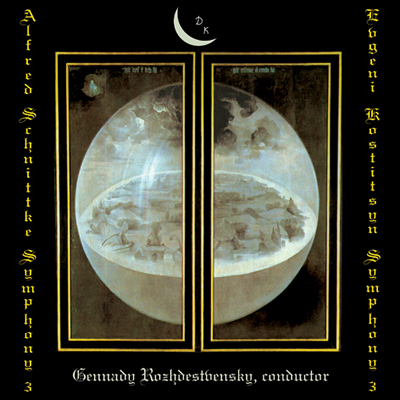
Alfred Schnittke,
Symphony No. 3
The
USSR Ministry of Culture Symphony Orchestra Synchronous music is a new style which demonstrates a new method of organization of musical material. Your perception will bounce between different compositions sounding at the same time and this shifting will evoke remarkable emotions and experiences. Synchronous music is perfect to portray the versatile, polyphonic nature of the modern world.
|
Dmitry Shostakovich The USSR TV
and Radio Large Symphony No. 8 was composed in 1943 during the siege of Leningrad. Hundreds of thousands of defenders of the former Russian capital were killed by German Nazis, or died from starvation. In Shostakovich's symphony, war’s stern events are imprinted with colossal, tragically generalized force. Fedoseyev lived in Leningrad during the siege. It places his interpretation of the Eighth Symphony by Shostakovich in a special category of personal experiences. |
||||||||
|
Sergei Prokofiev Victoria
Postnikova, piano Prokofiev's works have been categorized as barbaric, eclectic, ironic, romantic, post-romantic and anti-romantic, neoclassical, sarcastic, cosmopolitan, cold, industrial, lyrical, full of adrenaline, epic, schizophrenic... It looks like he cannot perfectly match any box our musicologists have been attempting to put him into. It is interesting, that Prokofiev never was paid mechanical royalties by American publishers and record labels during his lifetime, being discriminated against as a Soviet citizen.
|
Mikhail Glinka
The role of Mikhail Ivanovich Glinka in Russian music is comparable to the role of Shakespeare in English literature. Glinka's music represents Russian classicism. It brings an abundance of positive energy, reveals harmony and balance so common to the Russian character. |
||||||||
|
Mikhail
Glinka: Summer Night in Madrid The
USSR Symphony Orchestra |